Korbinian Brodmann and Brodmann Areas
Discover the interactive Brodmann atlas on the IFEN website and secure a copy for your practice or research group.
One of the greatest achievements of modern medicine and neuroscience is imaging, the ability to map neural activity, today called brain mapping. The German neuroanatomist and psychiatrist Korbinian Brodmann (1868–1918) was the first to map the human brain. He spent days and nights examining wafer-thin sections of human brains under a light microscope. He wanted to classify nerve cell tissue into delimited areas based on its structure and composition and thus discovered that, for example, cell bodies in the gray matter are distributed differently and certain types of neurons only appear in very specific regions. In 1909, he presented a map of the cerebrum with 52 areas. He called this "cytoarchitecture." Even then, he was able to assign different functions to some of these areas. Today, most Brodmann areas are assigned functions, which makes them particularly interesting for working with neurofeedback. With the help of modern methods, these areas can also be reached with EEG. The methods used for this employ the LORETA technique, a mathematical approximation that makes it possible to measure the activity of these structures by calculating the EEG and thus use it for neurofeedback.
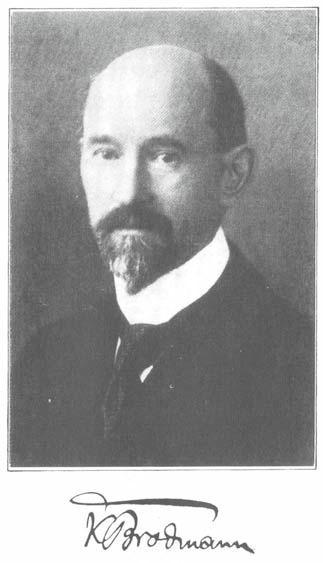
Before Brodmann's research, some areas of the brain, such as Broca's and Wernicke's areas, began to be identified. This happened after it was found that people with damage in these areas also suffered from speech disorders. Brodmann's brain mapping captures the functional areas of the cortex based on gross anatomical features and cortical microstructures. Brodmann's areas have been researched in increasing detail over the years and remained the best-known and most frequently used mapping of the cortex, even if some of the findings from back then are no longer accurate today and have been replaced by more precise methods. In the field of neurofeedback, Korbinian Brodmann's functional neuroanatomy has proven its worth for decades and enables many patients to improve their quality of life.
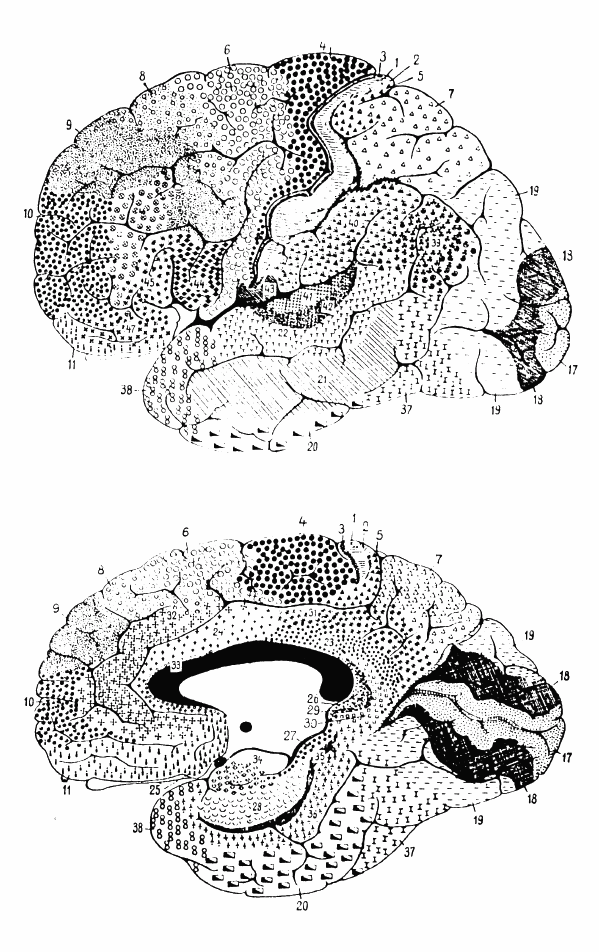
The IFEN poster on Brodmann areas includes a QR code for each of these areas, which, after scanning, will take you to the corresponding website with the accompanying explanations. At the same time, you can also study the Brodmann areas without the poster. Whatever way you want to use the attractive poster. You can also use the poster as an attractive eye-catcher to adorn one or another wall of your practice.