For all products. Structured recording and faster processing.
Available 24/7 for recording and preparing your request.


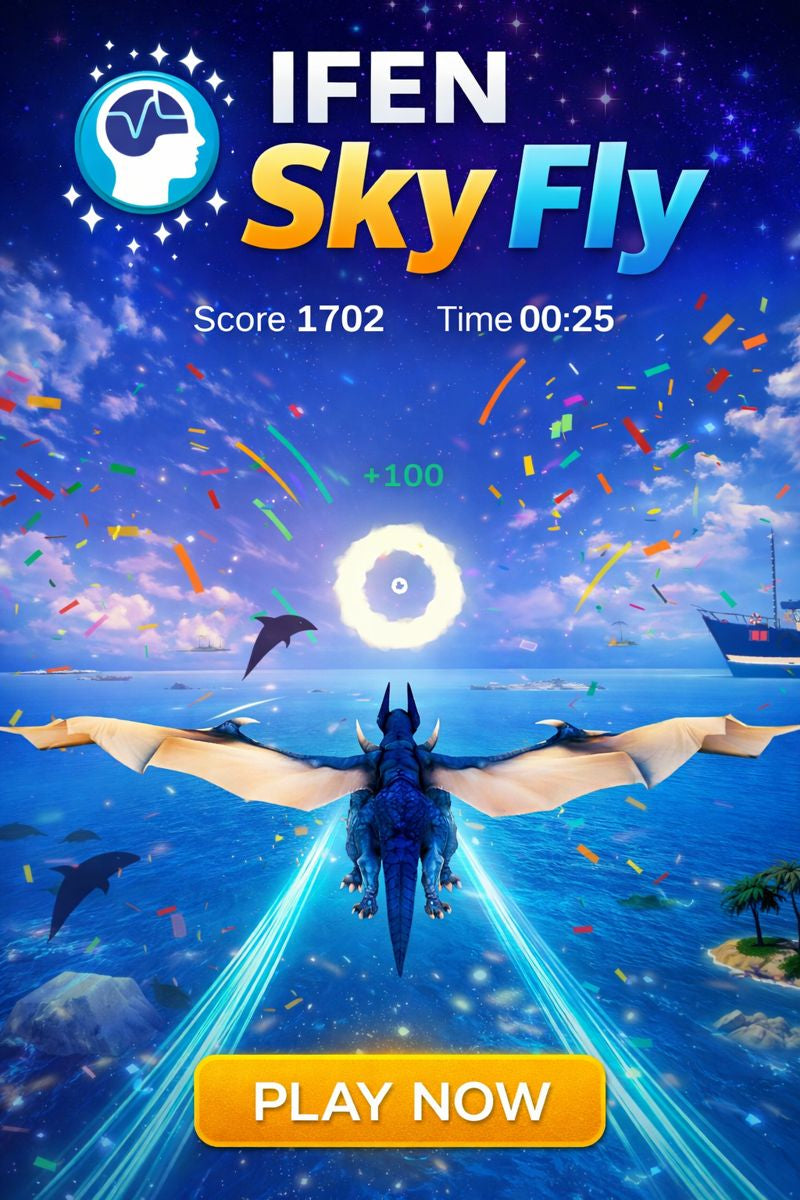
In a relaxing sky world, the trainee gently guides an aircraft through floating rings. To provide a sense of progress, the game rewards successful passages with points and reward sounds, making each hit feel like a small success.
Positive Feedback: The aircraft is guided smoothly, reward sounds are played, and the trainee receives points when flying through the rings.
Negative Feedback: The aircraft continues to fly straight without additional actions, and the trainee no longer receives points.
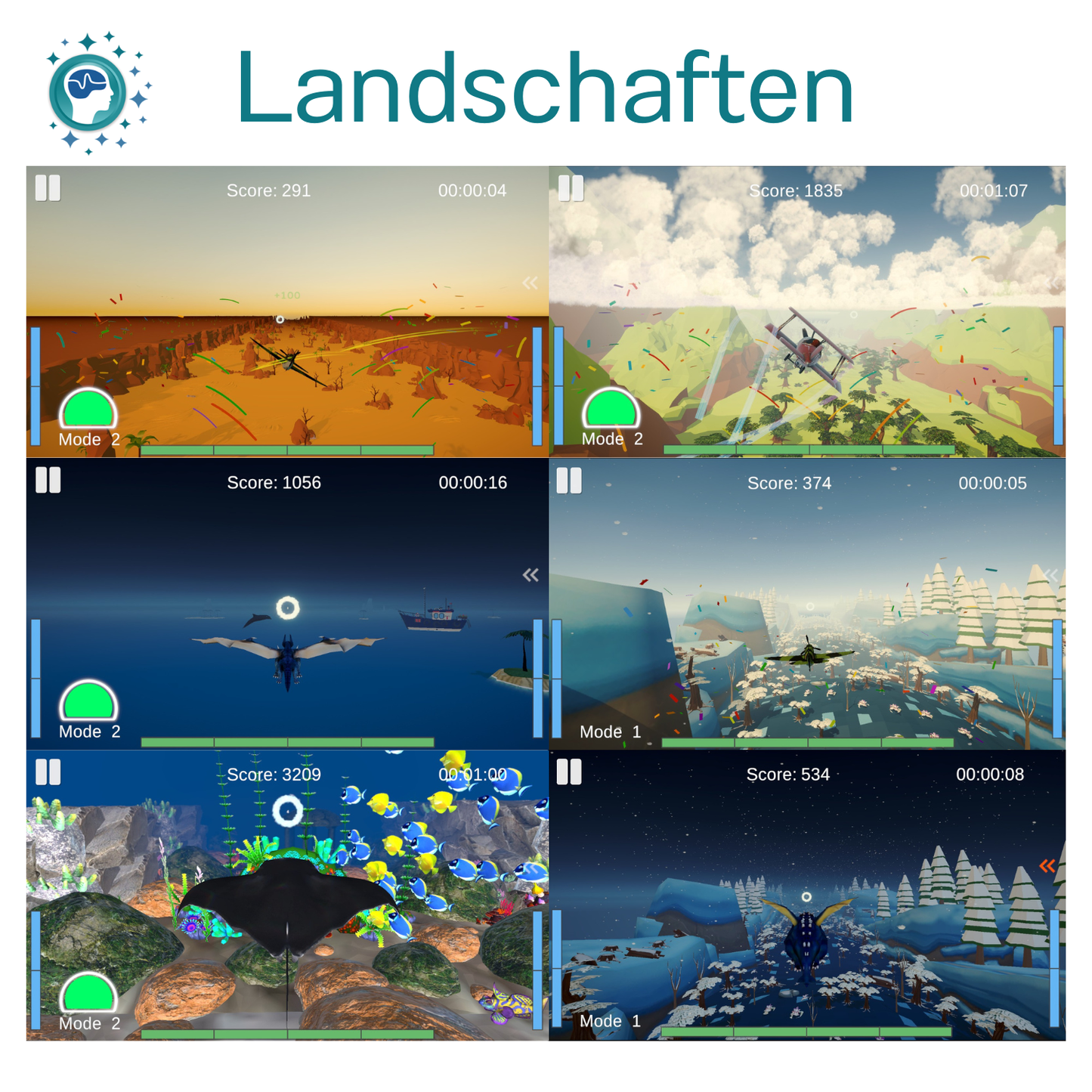
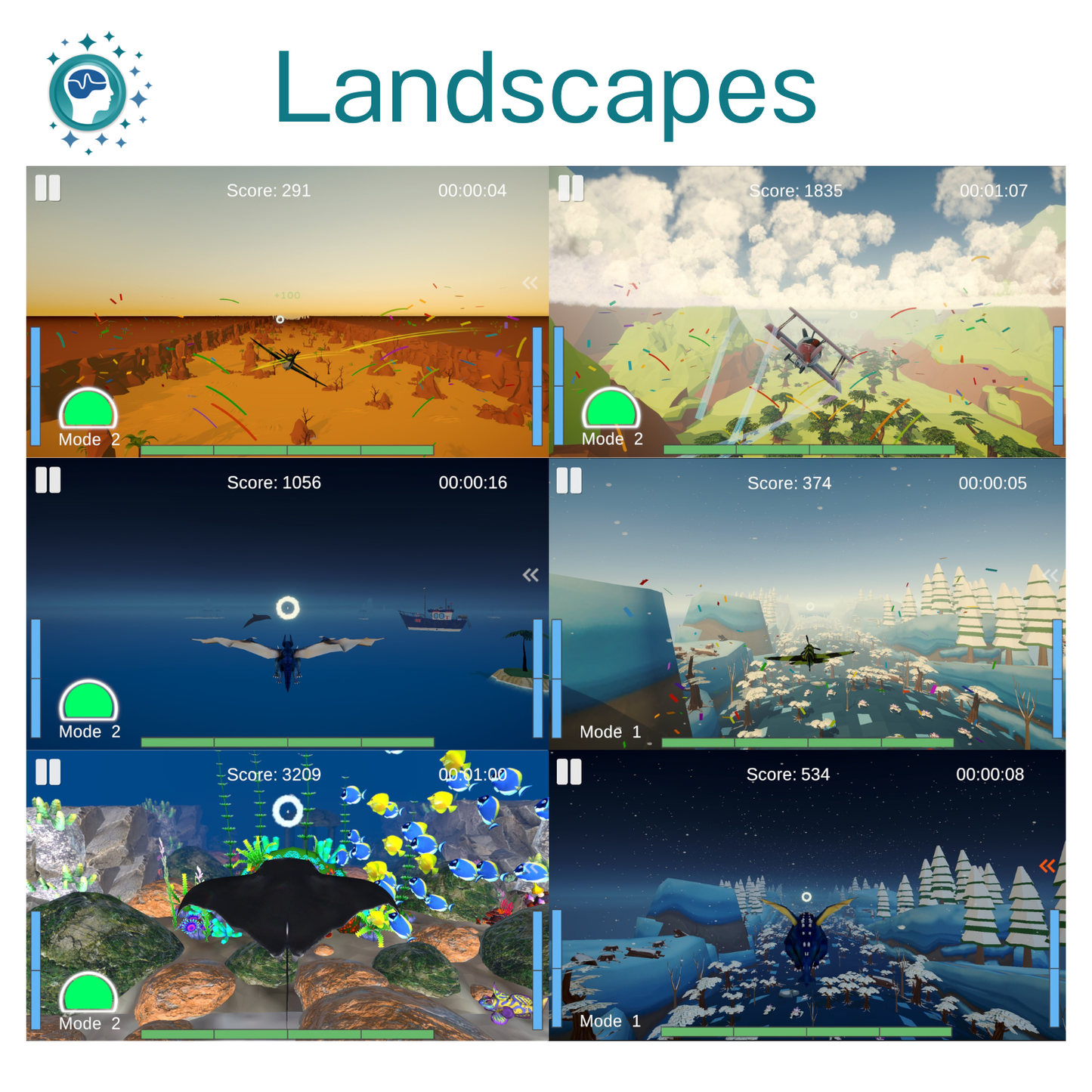
Customization: With selectable environments and character options (as well as music that matches each world), trainees can personalize the experience to stay engaged long-term.
 Performance presentation
 Progress
 Post-amplification synchronization
 Launcher
Couldn't load pickup availability
Delivery time approx. 1-4 working days

All prices include 19% German VAT. For business customers from the EU, VAT will be automatically removed at checkout after entering a valid VAT ID number (reverse charge).

How does the Reward Prediction Error (RPE) support neurofeedback training in IFEN Sky-Fly?
Neurofeedback is understood as a self-regulation process based on reinforcement learning, in which this is acquired through contingent feedback.
Motivation, salience of the reinforcer, and sustained engagement are considered important moderators of learning success. Since the subjective motivational value of feedback can vary between individuals and decrease with repeated exposure, the adaptive design of feedback environments is discussed as an approach to maintain effective reinforcement.
Against this background, offering multiple feedback or game options can be understood as a theoretically sound strategy to support engagement, reduce habituation effects, and maintain the reinforcing value of feedback across training sessions, thereby potentially promoting learning stability and the transfer of effects (Schwartz & Andrasik, 2016; Enriquez-Geppert et al., 2017; Lubianiker et al., 2022; Sitaram et al., 2024).
Here you can find more information about IFEN Games and our packages.


Developed by IFEN for BrainMaster – natively integrated, no additional installation, updates included. Also compatible with NeuroGuide (Applied Neuroscience).
VR headset: not included – we recommend Meta Quest 2 or Meta Quest 3. A PC version without VR headset is available separately.
For all products. Structured recording and faster processing.
Available 24/7 for recording and preparing your request.